
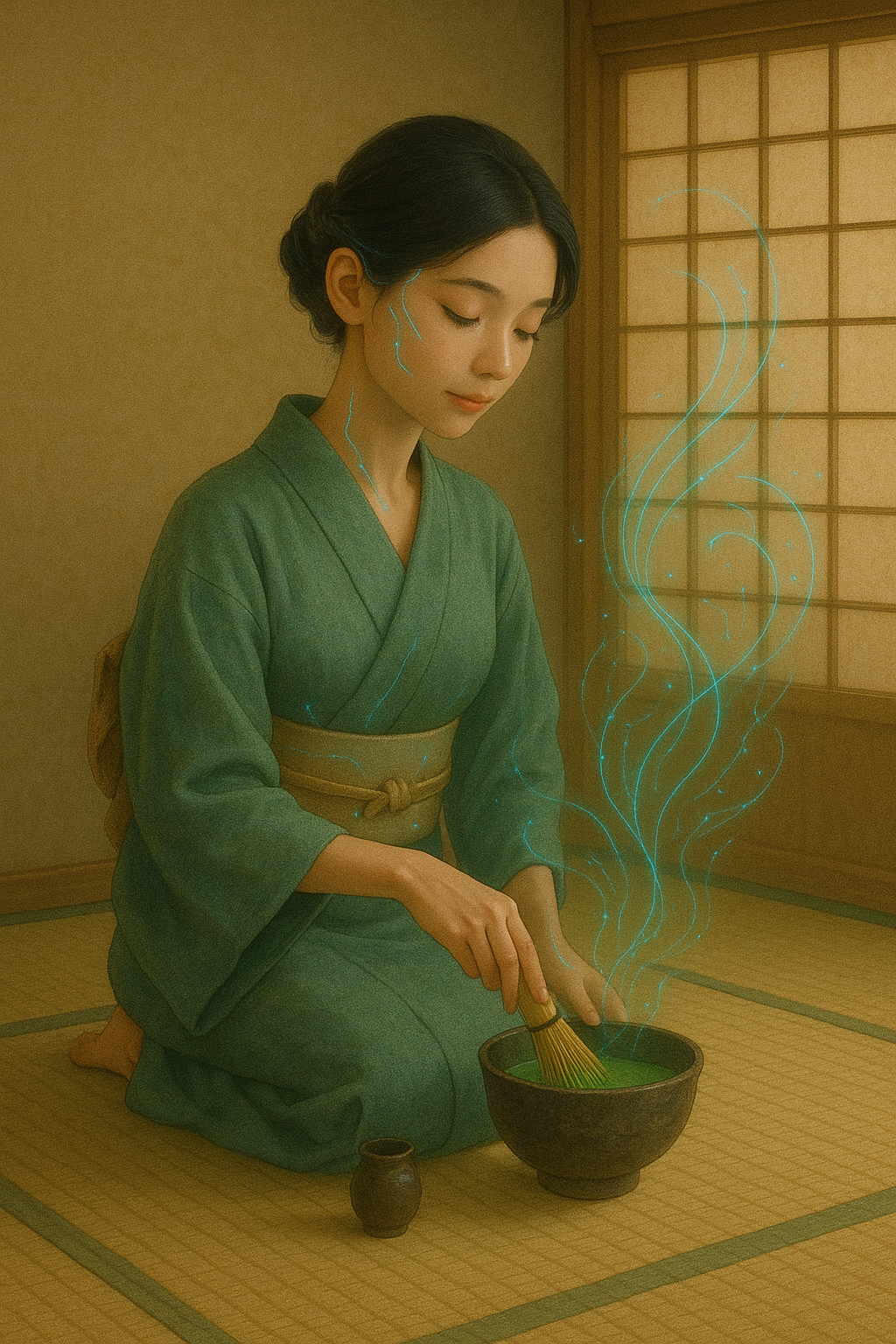
The Japanese tea ceremony, or sadō, is more than just preparing and drinking matcha. It is a ritual that embodies harmony, respect, purity and tranquillity. Over centuries, its carefully choreographed movements have come to symbolise the essence of Japanese culture and have influenced other traditional arts such as flower arranging and calligraphy. Participating in the ceremony is meant to purify the spirit and foster mindfulness.
Recently, researchers and artists have started to use motion‑capture cameras and sensors to record these subtle gestures and reproduce them in digital spaces. By capturing a tea‑master’s posture, the whisking motion of the bamboo whisk and the spatial relationship between host and guest, artificial intelligence can map these data into three‑dimensional models, virtual‑reality simulations and interactive applications. This makes it possible for people around the world to observe and practise the flow of the tea ceremony without being physically present in Japan.
Digitising master‑level movements helps preserve knowledge that might otherwise fade, while visualising these movements lowers the barrier for beginners and people who do not speak Japanese. Remote learning tools and VR or AR experiences let learners practise across geographical distances, and AI‑driven feedback can coach them on posture and timing. For creative professionals, integrating the aesthetics of the tea ceremony into digital systems offers new sources of inspiration.
At the same time, the spiritual nuance of the tea ceremony cannot be fully captured if one focuses only on mechanical motion. The values of harmony, respect, purity and tranquillity are felt rather than measured. It is important for learners to combine digital tools with real‑world practice under a qualified instructor and to view AI as a bridge between tradition and innovation, not a replacement for human experience.

コメント